
Executive Summary:
- Biology practicals help students understand scientific concepts through experiments observations and hands-on activities. Learning becomes more effective when students apply theory during laboratory sessions. Practical work strengthens scientific thinking.
- Many students face challenges during practical examinations because of weak observation skills, poor time management or nervousness. Mistakes are often caused by rushed work and unclear recording. Preparation improves performance greatly.
- Students can improve by practising diagrams revising scientific vocabulary and learning proper observation techniques. Clear recording and careful reading of instructions also help students avoid common mistakes. Confidence develops through consistency. Regular revision allows students to become more familiar with laboratory procedures and scientific explanations. Observation accuracy is also improved through repeated practice. Strong habits support better results.
- During PSLE science tuition lessons students are usually guided through practical concepts experiments and scientific analysis exercises. Structured support helps students understand procedures more clearly and perform with greater confidence during assessments.
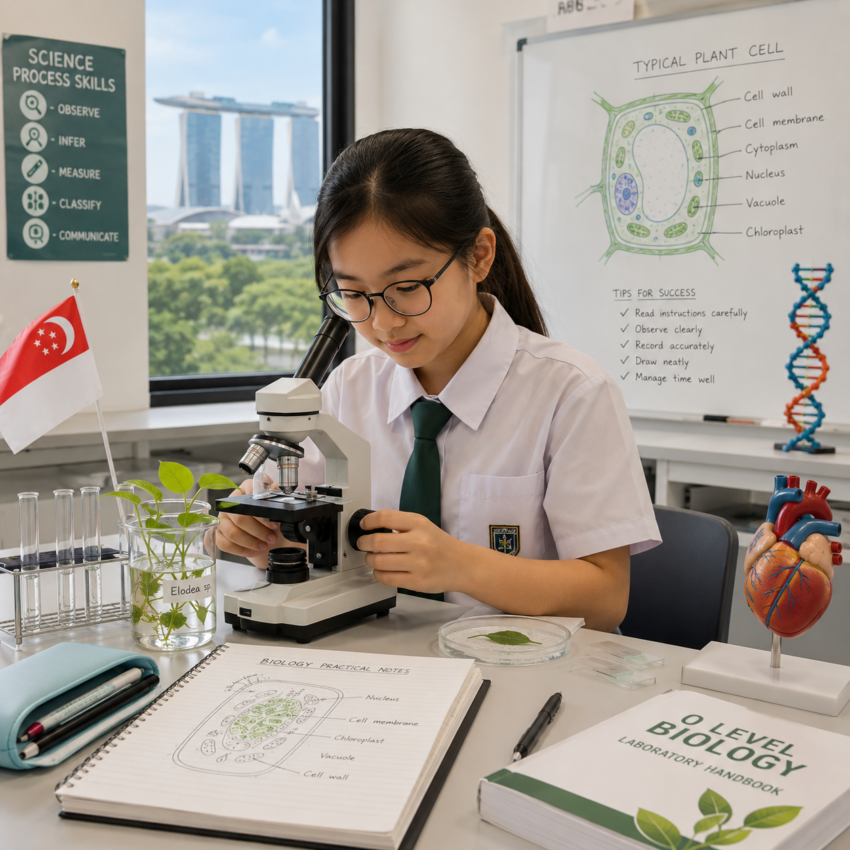
Biology practicals help students understand science through direct observation and experiments. Concepts become clearer when students perform activities themselves.
Practical learning strengthens understanding.
Many students enjoy biology practicals because experiments feel more interactive. Important scientific skills are also developed during laboratory sessions. Confidence grows through practice. Students are expected to observe record and analyse results carefully. Accuracy is often rewarded during practical assessments. Attention to detail matters greatly.
Strong preparation can improve performance during practical examinations. Guidance is often provided through classroom lessons and structured science programmes.
Support helps students improve steadily. Students attending PSLE science tuition classes are usually trained to handle experiments more confidently. Scientific thinking is also strengthened through regular practice and revision.
Understanding Biology Practicals
Biology practicals involve experiments observations and hands-on scientific activities. Students apply theoretical knowledge during these sessions. Learning becomes more engaging.
Practical lessons usually include microscopes diagrams specimens and laboratory equipment. Scientific procedures are expected to be followed carefully. Safety rules must always be respected.
Students learn how living organisms function through direct investigation. Better understanding is often developed through observation and analysis. Practical work supports classroom learning effectively.
Why Biology Practicals Are Important
Biology practicals improve scientific understanding. Students remember concepts more easily through experiments. Visual learning supports memory retention. Important laboratory skills are also developed during practical sessions. Observation techniques become stronger through repeated activities. Accuracy improves with regular practice.
Students learn how to collect data organise results and draw conclusions logically. Analytical thinking is strengthened during scientific investigations. Practical work encourages curiosity too.
Biology practicals also prepare students for higher-level science education. Confidence is usually improved through hands-on learning experiences. Preparation creates better performance.
Common Challenges During Biology Practicals
Many students feel nervous during practical examinations. Time pressure often increases stress levels. Mistakes are sometimes caused by panic. Some students struggle with identifying specimens correctly. Others find scientific recording difficult during experiments. Observation skills may feel challenging initially.
Laboratory equipment can also appear confusing for beginners. Instructions are sometimes misunderstood during fast-paced activities. Careful reading reduces confusion. Students may lose marks through incomplete answers or weak analysis. Practical questions often require detailed observations and logical explanations. Strong preparation helps greatly.
Tips for Success in Biology Practicals
Students can improve practical performance through consistent preparation. Simple habits often create noticeable improvement. Practice builds confidence steadily.
-
Read Instructions Carefully
Students should read every instruction slowly before starting experiments. Important details are sometimes missed during rushed reading. Accuracy depends on careful attention. Understanding procedures clearly helps students avoid unnecessary mistakes. Better organisation is usually achieved through preparation. Calm thinking improves performance.
-
Organise Equipment Properly
Laboratory tools should be arranged neatly before experiments begin. A clean workspace improves concentration during practical tasks. Organisation supports efficiency. Students should handle equipment carefully at all times. Safety guidelines must also be followed strictly inside laboratories. Discipline prevents accidents.
-
Practise Drawing Scientific Diagrams
Biology practicals often require labelled scientific diagrams. Neat drawings usually receive better marks.Correct labelling is also expected during assessments. Consistency improves drawing accuracy.
-
Manage Time Effectively
Time management is important during practical examinations. Some students spend too long on one activity. Balance is necessary. Students should divide time carefully between observations drawings and written answers. Faster organisation improves overall performance. Planning reduces unnecessary stress.
-
Record Observations Clearly
Observations should be written using simple scientific language. Clear recording helps examiners understand answers easily. Messy writing creates confusion. Students should include important details during every experiment. Accurate descriptions strengthen practical responses. Clarity improves communication.
Importance of Scientific Vocabulary
Scientific vocabulary improves answer quality during biology practicals. Proper terms make explanations more accurate. Correct language strengthens responses. Students should learn common biology terms regularly. Familiarity with scientific words improves confidence during experiments. Practice supports better recall.
Role of Observation in Biology Practicals
Observation forms the foundation of biology practicals. Students gather information through careful examination. Attention improves experimental accuracy. Changes in colour texture movement or structure should be noticed carefully. Important results are sometimes overlooked during rushed observations. Patience improves scientific work.
Students should compare specimens and identify differences accurately. Logical conclusions are developed through proper observation. Scientific thinking becomes stronger gradually.
How Revision Helps Practical Performance
Revision improves confidence before practical examinations. Students remember procedures more effectively through regular review. Preparation reduces uncertainty. Students should revise diagrams equipment functions and experiment steps consistently. Familiarity with procedures improves laboratory performance. Repetition strengthens understanding.
Sample practical questions also help students prepare better. Mistakes can be corrected before actual examinations. Practice creates stronger readiness.
Importance of Staying Calm During Practicals
Many students panic during science practicals. Nervousness often affects concentration and accuracy. Calm thinking improves decision-making. Confidence grows gradually.
Mistakes should not cause panic during examinations. Small errors can still be corrected calmly. Positive thinking supports performance.
How PSLE Science Tuition Supports Practical Learning
Many students benefit from guided science support. Structured learning helps students understand experiments more clearly. Confidence improves through practice. During PSLE science tuition lessons students often practise observation techniques diagrams and scientific explanations regularly. Practical concepts are usually simplified through guided teaching. Support makes learning easier.
Teachers also provide correction and feedback during science exercises. Weak areas are identified through consistent assessment. Personal guidance improves understanding. Mock practical questions revision worksheets and experiment discussions are commonly included during tuition programmes. Students become more familiar with scientific procedures over time. Preparation strengthens exam readiness.
Building Confidence in Biology Practicals
Confidence develops through regular exposure to experiments. Students improve gradually with practice and correction. Patience is important. Small improvements should be recognised during learning. Consistent effort often produces better long-term results. Progress happens steadily.
Students should avoid comparing themselves with others during practical lessons. Individual improvement matters more than competition. Confidence grows through experience.
Conclusion
Biology practicals help students understand science through observation experimentation and analysis. Strong practical skills improve scientific thinking and academic performance.
Preparation supports better results.
With proper guidance and steady revision students can master biology practicals more effectively. Support from PSLE science tuition programmes also helps students strengthen laboratory skills and build confidence gradually.
FAQs
How can students improve observation skills?
Students can improve observation skills through regular practice careful attention and detailed recording during experiments. Patience improves accuracy.
Why do students lose marks during practical examinations?
Marks are often lost because of incomplete observations poor diagrams unclear answers or time management problems. Careless mistakes affect performance greatly.
How important are scientific diagrams in biology practicals?
Scientific diagrams help students present observations clearly. Neat labelling and accurate drawings are usually expected. Presentation improves readability.
What should students do before practical examinations?
Students should revise experiment procedures scientific vocabulary diagrams and common practical questions regularly. Preparation increases confidence.
How does time management help during practicals?
Good time management allows students to complete observations diagrams and written answers properly. Planning reduces unnecessary stress.
How does PSLE science tuition support practical learning?
PSLE science tuition helps students practise observation techniques diagrams scientific explanations and experiment analysis regularly. Guided support improves understanding.
