
Executive Summary:
- Writing for English O-Level Composition involves understanding different essay types. It’s not one-size-fits-all. Structure must be adapted and tone is adjusted based on the question. When formats are understood clearly, writing becomes more focused and effective. It reduces confusion a lot.
- Strong planning improves clarity and ideas should be organised before writing begins. Introductions are crafted to engage and paragraphs are developed with purpose. Vocabulary is used carefully and grammar must be accurate to maintain quality. Small improvements matter. Every time.
- Consistent practice builds confidence and feedback helps refine skills. Many students develop their basics early through PSLE English tuition. These foundations support better performance at the O-Level stage. It all connects. Over time.
Good vocabulary won’t get you writing well for O-Levels. It takes structure. Students preparing for English O-Level Composition can encounter different types of essays. Everybody needs to approach things a little differently.
Marks are awarded based on clarity organisation and expression. These elements must be balanced carefully. Once you understand the formats, writing becomes much easier. Let’s break them down.
1. Narrative Essays
Narrative essays are stories. They are popular. You make characters, build a plot and describe events in order. The story is developed with a clear beginning, middle and end. Emotions are often added to attract the reader’s attention. It feels personal. And creative.
Tip: Focus on storytelling and avoid making the plot too complicated.
2. Descriptive Essays
Descriptive essays focus on details. They paint a picture. You use colourful language and sensory details to create a picture of a place, person or event. The reader ought to be able to picture the scene vividly and feelings are often expressed through description. It creates imagery. Strongly.
Tip: Use your senses- what you see, hear, feel, smell and taste.
3. Expository Essays
Expository essays explain ideas or topics. They are factual. You present information clearly and points are supported with examples. Opinions are usually not included and the focus is on explaining or informing. Structure is important and ideas must be organised logically. It requires clarity. Above all.
Tip: Keep your explanations simple and well-structured.
4. Argumentative Essays
Argumentative essays present a clear opinion. They take a stand. You argue for or against a topic and reasons must be supported with evidence. Counterarguments are sometimes included and they are addressed to strengthen your position. Logical thinking is required and points must be convincing. It challenges thinking. In a good way.
Tip: Stay balanced and support your points with strong examples.
5. Discursive Essays
Discursive essays explore both sides of a topic. They are balanced. Different viewpoints are discussed and the pros and cons are examined carefully. A conclusion is reached at the end and it reflects your understanding of the topic. Ideas are presented objectively and fairness is maintained throughout. It shows depth clearly.
Tip: Present both sides equally before giving your opinion.
6. Reflective Essays
Reflective essays focus on personal thoughts and experiences. They feel introspective. You reflect on an event or idea and lessons are often shared. Emotions and insights are included and the writing becomes more personal. The structure is still important and ideas must flow logically. It feels honest and real.
Tip: Be genuine and focus on what you learned.
General Writing Tips for O-Level Composition
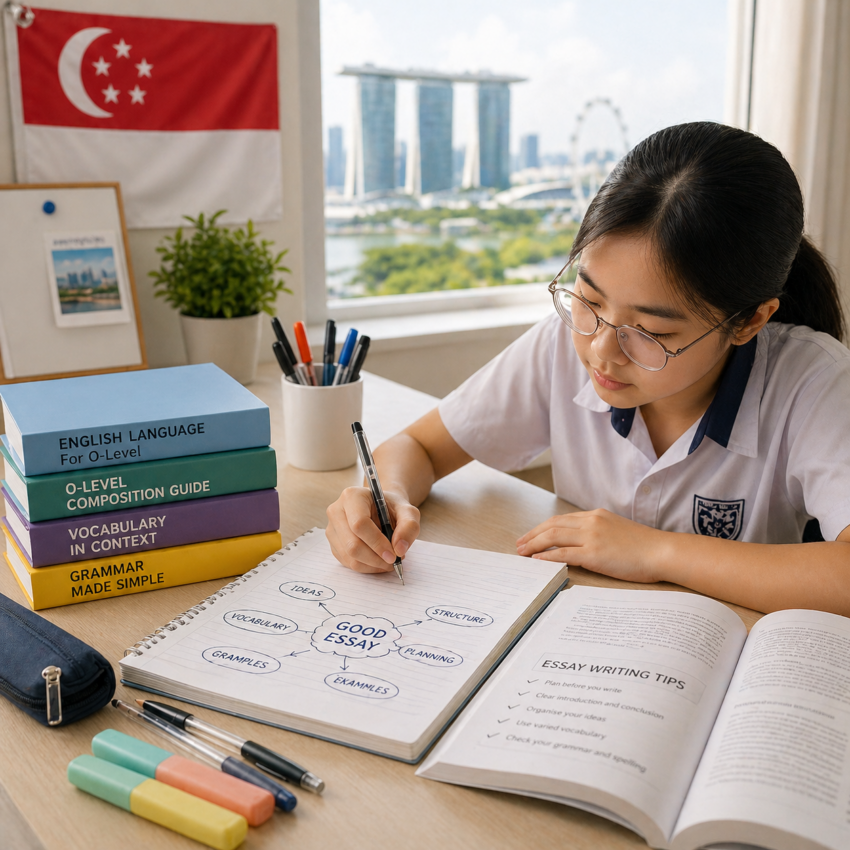
Good writing habits make a big difference. They always do. Before you begin writing, make a plan and clearly arrange your thoughts. A strong introduction should be written and it must capture attention. Paragraphs should be structured properly and transitions are used to maintain flow. Keep sentences clear. Not too long. Check your work always.
The Role of Practice and Guidance
Improvement comes with consistent effort. There’s no shortcut. Students should practise different essay types and feedback must be taken seriously. Weak areas are identified and they are improved over time.
Some learners benefit from additional guidance. And structured support can help refine writing skills. It builds confidence. Gradually. Many students start developing these skills early through PSLE English tuition. Strong foundations are carried forward to O-Level preparation.
FAQs
What are the six types of essays in English O-Level Composition?
There are six main types. Each has a purpose. Narrative, descriptive, expository, argumentative, discursive and reflective essays are commonly tested. Different structures are followed and the writing style is adjusted based on the question. Know the differences.
How do I choose the right essay type in the exam?
You should pick the question you understand best. Some topics suit storytelling. While others require explanation or argument. The question must be read carefully and the format should be chosen accordingly. Clarity helps.
How can I score well in English O-Level Composition?
Plan your essay, develop your ideas clearly and check your grammar. Marks are awarded for organisation and expression and mistakes should be minimised. Consistency matters.
Does vocabulary matter in O-Level composition writing?
Yes. But accuracy comes first. Words should be used correctly and they must suit the context. Overusing difficult vocabulary can lead to errors and clarity may be affected. Be precise.
What are common mistakes students should avoid?
Students often go off-topic. It happens. They may not plan properly and ideas can become unclear. Conclusions are sometimes rushed and grammar mistakes are repeated. These issues affect overall marks and they should be corrected early. Stay focused.
Can early learning like PSLE English tuition help later?
It builds basics. Through PSLE English tuition, students develop grammar, structure and writing habits. These skills are carried forward. They support better performance in English O-Level Composition. Strong foundations help.
