
Executive Summary:
- In this article, we look closely at why upper primary math becomes challenging for many children. Concepts deepen. Expectations increase. And small gaps from earlier years often begin to show. These changes can affect confidence quietly before results reflect it.
- Parents play an important role during this stage. With the right awareness, struggles can be identified early. Support can be adjusted. And children can regain confidence through patience, structured practice and timely guidance. Progress may feel slow at first. It still matters.
Upper primary mathematics often feels like a turning point for many children. Concepts deepen. Expectations rise. And confidence is tested quietly in classrooms and at home. Parents notice the shift even before grades change. It is felt.
Some children cope quickly. Others struggle silently. Understanding what makes upper primary math challenging helps parents respond with clarity instead of panic.
Why Upper Primary Math Feels More Difficult
Math in upper primary is no longer about simple calculations. Abstract thinking is introduced. Topics such as fractions, ratios, word problems and multi-step reasoning become common. A stronger foundation is required. And gaps from earlier years start to show.
Children are expected to explain their thinking clearly. Answers alone are not enough. This change surprises many students. It is often underestimated. Parents may hear, “I understand in class but not during homework.” This confusion is real. And it should not be ignored.
Common Struggles Parents Often Notice
Some challenges appear slowly. Others arrive suddenly. Most are missed at first.
Children may show these signs:
- Taking longer to solve basic questions
- Avoiding math homework
- Getting frustrated easily
- Memorising steps without understanding
- Losing confidence after small mistakes
These behaviours are usually not laziness. They are signals. They should be read carefully.
Concept Gaps That Build Over Time
Math builds layer by layer. When one layer is weak, the next becomes unstable. Earlier topics like basic fractions or multiplication tables are often assumed to be secure. Sometimes, they are not. Mistakes are repeated. Confusion increases. And confidence drops quietly.
This is why early support matters. Primary 3 math tuition is often chosen by parents when these gaps first appear because intervention works best before frustration sets in.
How Parents Can Offer the Right Support
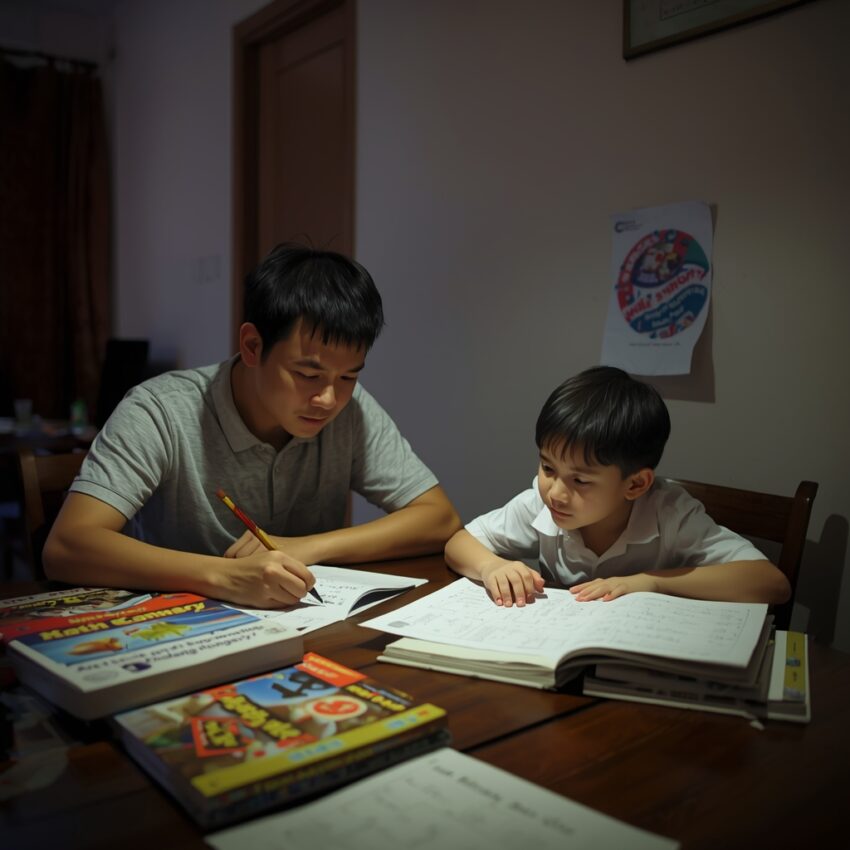
Parents want to help. Sometimes, help feels complicated. Start simple. Listen first. Observe how your child approaches a problem. Avoid correcting too quickly. Let thinking be seen. Many parents ask, How to help a kid who struggles with math? The answer is rarely about doing more worksheets. It is about slowing down and building understanding step by step. Encouragement matters. Pressure does not.
The Role of Practice and Explanation
Practice strengthens familiarity. Explanation strengthens understanding. Both are needed.
Children are asked to explain their answers aloud. This feels uncomfortable at first. It becomes powerful later.
Mistakes should be discussed calmly. Learning improves when errors are treated as learning tools. Progress may be slow. That is acceptable.
When Extra Guidance Becomes Helpful
Sometimes, home support is not enough. This does not mean failure. It means needs have changed. Guided learning provides structure. Concepts are revisited. Confidence is rebuilt. And progress becomes visible again. Targeted support helps children feel less alone with their struggles. They realise they are not the only ones finding maths hard. Relief follows.
Maths confidence grows when effort is recognised. Small wins matter. So does patience.
Children need time to trust their abilities again. This trust cannot be rushed. Parents play a key role here. Calm reassurance helps more than constant correction. Consistency matters. And belief makes a difference.
Final Thoughts
Upper primary maths challenges are common. They are not permanent. With the right support, children regain confidence and clarity.
Understanding the problem is the first step. Responding with patience is the next. Growth follows. Maths does not have to become a fear. With steady guidance, it can become manageable again.
FAQs
1. Why does my child start struggling with maths in upper primary?
Maths becomes more abstract at this level. Problem-solving replaces simple calculations. Earlier gaps are often exposed. This shift can feel overwhelming. It is common.
2. Are mistakes in upper primary maths a sign of poor ability?
No. Mistakes usually signal confusion, not lack of ability. Concepts may not be fully understood. With the right explanation, improvement is often seen.
3. How can parents support maths learning at home without pressure?
Start by listening. Encourage children to explain their thinking. Avoid rushing corrections. Calm support helps more than constant practice.
