
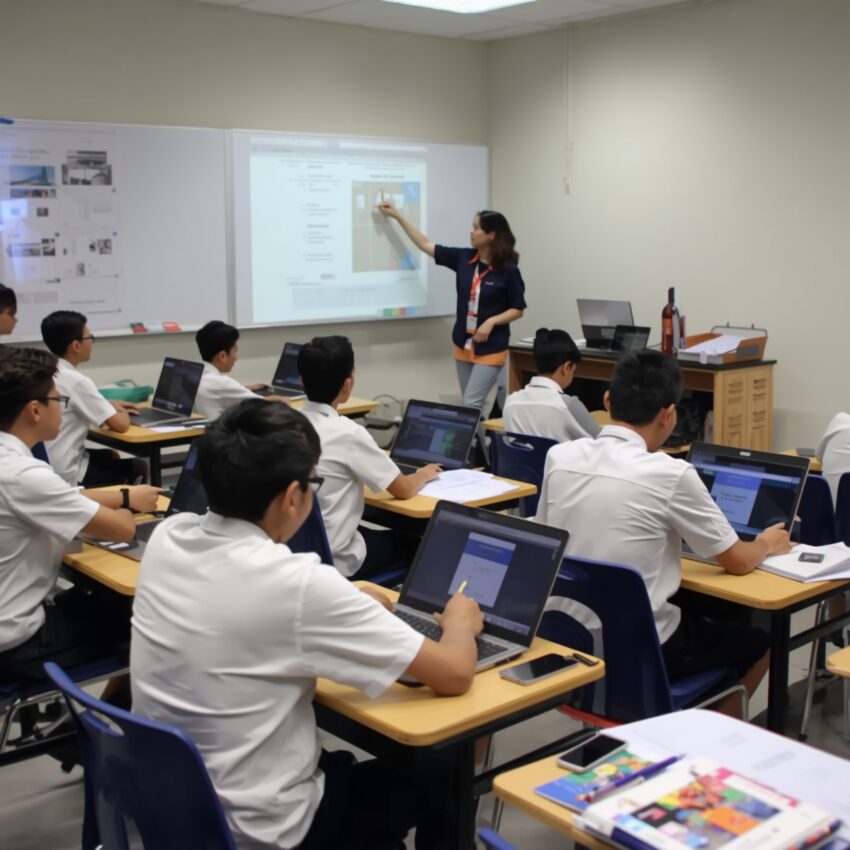
Executive Summary:
- In this article, we explore how blended learning is reshaping the way students study today. Its impact is being noticed across many classrooms. Teachers introduce lessons through both online tools and in-person guidance, allowing concepts to feel clearer and more approachable. Some children learn faster. And their confidence grows when ideas are reinforced in more than one way.
- A blended learning definition is understood as a mix of classroom teaching and digital learning. It keeps students more engaged because information is delivered through different formats. Progress becomes steadier. And activities can be adjusted easily to match each child’s pace without increasing stress.
- Blended learning supports children in flexible and meaningful ways. Its usefulness is recognised widely. And students benefit from this balanced approach that strengthens both independence and comprehension.
Blended learning is reshaping how many students study today and its impact is becoming clearer across classrooms. Some children learn faster when lessons combine online tools with in-person guidance. Their attention improves. And concepts feel easier when presented in more than one way. This mixed style helps students learn with flexibility while still receiving strong teacher support.
A proper blended learning definition explains it as an approach that merges face-to-face teaching with digital learning. Progress becomes more consistent. And lessons can be tailored in ways that suit different abilities without creating stress.
This combination allows clearer understanding. And real-time feedback helps children correct mistakes quickly.
Why Blended Learning Works for Today’s Students
Confidence is built slowly as students interact with different learning tools. Some tasks are completed online so students can practise independently. And other parts are delivered in class to reinforce concepts.
The structure becomes flexible. Short online quizzes may be used to check understanding, while group discussions are kept for the classroom. Students feel supported because they learn in stages. And their progress is monitored carefully.
Technology is used thoughtfully in blended classrooms. Videos and visuals help simplify difficult topics. Interactive tools make learning more dynamic. And children who struggle with traditional methods often perform better because concepts are repeated in different formats.
How Blended Learning Boosts Understanding
Learning becomes smoother when children can pause, review and revisit topics. Students take in information at their own speed. Some lessons are absorbed instantly. And other topics are approached step by step until the child feels confident.
Blended learning encourages:
- More consistent revision
- Better retention through visuals
- Higher engagement in class discussions
- Stronger participation from quiet students
- Improved confidence in weaker areas
Teachers adjust difficulty easily. Concepts that seem confusing can be reinforced with online tutorials. Skills that need practice can be repeated quickly with digital tools. And clearer explanations can be given in person when necessary.
Growth becomes steady. Students stay motivated. And they begin to enjoy learning because it fits their rhythm instead of forcing them into a fixed pace.
Real Examples of Blended Learning in Action
A science lesson might start with a short classroom demonstration. Students then complete simulations online to explore ideas more deeply. Their understanding sharpens. And doubts can be addressed later during class discussions.
In English, vocabulary may be introduced through videos. Worksheets are done in class. And revision is completed online at home. This method feels natural to most students. Their focus is maintained. And the routine becomes easy to follow.
Subjects like mathematics benefit greatly from blended approaches. Students practise problems online, check solutions instantly and bring their questions to class. This reduces frustration. And confidence grows week by week.
Benefits for Students Learning at Home
Blended learning works well for home-based support too. Parents often notice that children revise more effectively when lessons include both teacher guidance and online tools. Their study habits improve. And consistency becomes easier to maintain.
Some families use blended methods through PSLE online tuition because it provides structured lessons, immediate feedback and guided revision. Students learn with more clarity. And parents receive updates that track performance over time.
Online lessons make learning flexible. In-person explanations make it stronger. And together, they create a system that helps children progress at a comfortable pace.
Why Blended Learning Will Stay Relevant
The needs of students continue to change. Schools adapt quickly. And teachers know that learning becomes more effective when technology supports traditional methods rather than replacing them.
Blended learning offers:
- Flexibility for different learning speeds
- More personalised support
- Better use of classroom time
- Strong revision tools
- Higher student engagement
Its value is recognised widely. Students become more independent. Their problem-solving improves. And lessons feel more meaningful because they combine structure with choice.
Blended learning remains one of the most adaptable approaches for modern education. And students benefit from this thoughtful balance.
