
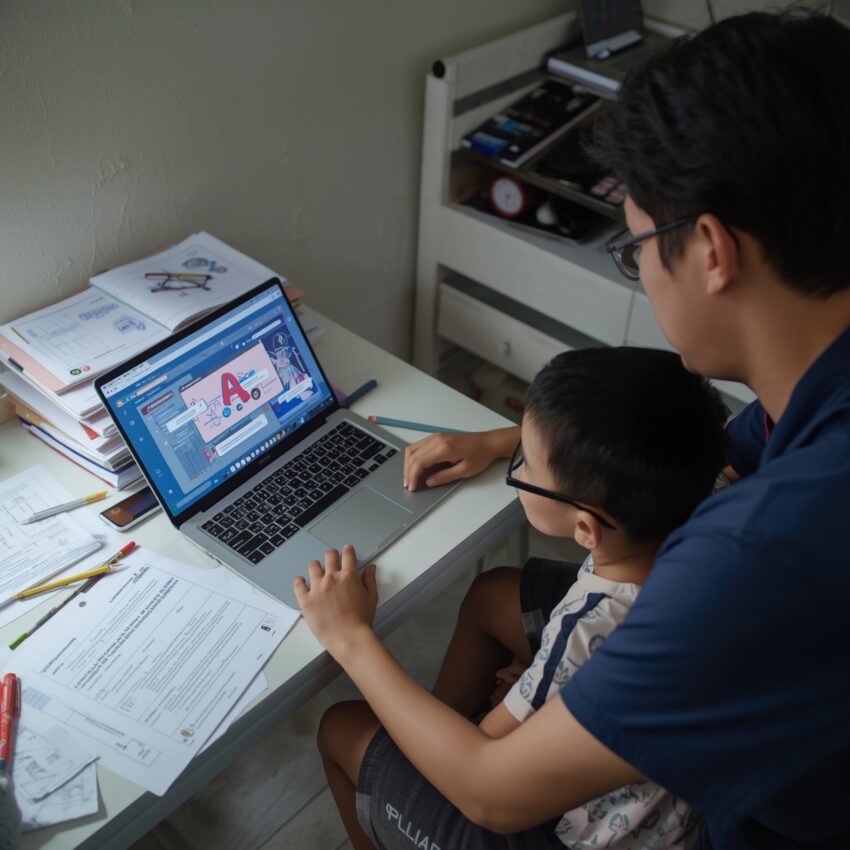
Parents everywhere are asking the same question. Some ask quietly. Some ask with worry. And some ask with curiosity: Is my child secretly using AI for homework? This question isn’t surprising at all. AI tools have slipped into everyday learning faster than anyone expected. And AI Is Transforming Education in ways that both excite and unsettle families.
But before panic takes over, let’s unpack what this really means.
AI Has Become a Silent Study Partner
Children are exploring AI tools more frequently now. Their assignments are often completed with AI-generated explanations or examples. Teachers are noticing this shift. They worry about originality. And parents wonder if this is helpful or harmful. The behaviour isn’t shocking. Curiosity drives kids straight to technology.
Is It Bad to Use AI for Homework?
Parents ask, “is it bad to use AI for homework?” The answer isn’t simple and it shouldn’t be. AI can act as a tutor. It explains hard concepts more clearly than textbooks sometimes can. But when it replaces effort, understanding disappears.
Some students learn deeply with AI. Others hide behind it. Good or bad depends entirely on how the tool is used.
AI Helps When Students Ask the Right Questions
Students can benefit from AI when they use it to fill gaps. Complex topics are broken down into smaller ideas and clarity is gained faster. AI tools also summarise notes. They organise ideas neatly. And they reduce the fear of difficult subjects.
One question can open a whole chapter of understanding. That’s powerful.
But AI becomes harmful when it becomes a shortcut. Over-reliance can develop quickly. Homework is sometimes completed in seconds and effort gets replaced by automation. Teachers see signs of this. They recognise voice, tone and style inconsistencies. Learning then gets weaker. A child stops thinking independently. That’s the real danger.
AI Is Changing Education And Students Must Adapt
Education systems worldwide are adjusting. Assignments are redesigned and assessments are shifting toward critical thinking. Schools understand the reality: AI Is Transforming Education whether anyone likes it or not. And resisting the change isn’t the solution. Students must learn to use AI responsibly. That’s the new academic skill.
Teach Your Child Healthy AI Use at Home
Parents can guide children more easily than they think. Young learners can be reminded to write first, then check with AI for clarity. Drafts can be encouraged. Reflections can be required. And transparency should always be expected. Children respond well to boundaries. They just need to know why those boundaries matter.
Some families write an agreement. This agreement is discussed openly and shaped with the child’s input. Rules feel less restrictive when children help design them. And accountability becomes shared. A balanced agreement keeps AI from becoming a crutch. It stays a tool-not a replacement.
Focus on Thought, Not Just Answers
Students should be pushed to explain what they learnt. Their explanations can be checked against the AI’s responses and differences can be discussed. This small habit strengthens understanding. And it keeps learning genuine. Reflection is what truly develops the mind. Not shortcuts.
Final Thoughts
AI is here and it’s not going anywhere. Parents can worry or they can guide. Is it bad to use AI for homework? Not always. Not if used with intention. But misuse can quickly harm a child’s ability to think independently. As long as AI Is Transforming Education, students will need to transform with it. And when children learn to use AI honestly, wisely and thoughtfully, they don’t just survive the change-they grow because of it.
