
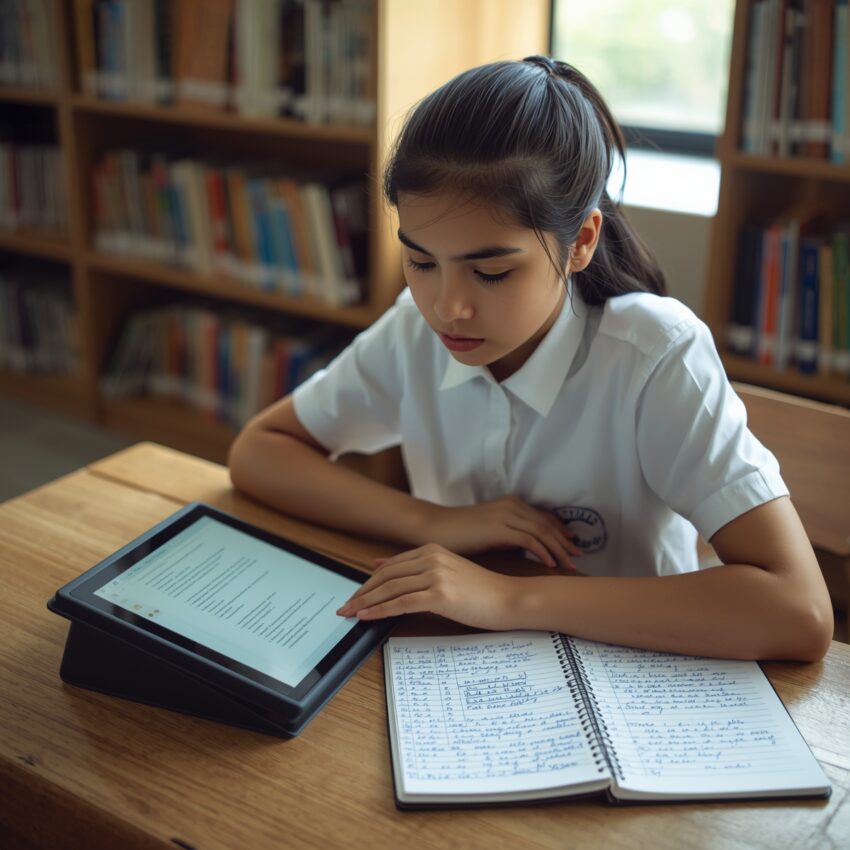
New school. New subjects. New expectations. Secondary 1 feels like stepping into a bigger world more freedom but also more responsibility. All of a sudden, there are more chapters, assignments, and opportunities to become lost in the jumble of notes.
And that’s where the big question comes in: should you go digital or stick with old-school paper notes? Both have their charm. Both have their flaws. And both can work depending on how your child learns best. Whether they’re attending classes in school or enrolled in PSLE online tuition to strengthen their basics, finding the right way to take notes can make studying smoother and far less stressful.
Let’s break it down – the pros, cons and some hacks to get the best of both worlds.
The Case for Paper Notes
Why it works:
Writing by hand is slow – and that’s a good thing. It forces the brain to process information, not just record it. When students write, they paraphrase, simplify and internalize. That means stronger memory retention. Research backs this up. Paper also wins for creativity. The freedom of the page encourages flexibility – something digital apps can’t always replicate naturally.
But the downside? Paper piles up. Notebooks get lost. Revision becomes a hunt through stacks of pages. And when exams approach, “where did I write that formula?” can feel overwhelming.
The Case for Digital Notes
Now enter the digital age – where students carry their entire learning universe inside a tablet or laptop. Typing is fast. Searching is instant. Sharing notes with classmates? Just a click.
Students who are already used to devices (especially those who attend PSLE online tuition sessions) find digital note-taking intuitive. It’s efficient, neat and backed up in the cloud – no fear of spilled water or missing pages.
Why it works:
Digital tools allow for structure and organization. Apps like Notion, GoodNotes or OneNote help students categorize subjects. You can also insert images, record voice notes or even paste screenshots from class slides. Need to review during a bus ride? Open the app. Want to highlight key ideas? Choose a color. Everything stays synced and searchable. But the downside? Screens can distract. Notifications. Tabs. Music. The digital world doesn’t sit quietly while you focus. And the fast pace of typing can make note-taking too mechanical – the student becomes a scribe instead of a thinker. Digital notes are powerful but easy to misuse.
Hybrid Note-taking: The Smart Middle Ground
Here’s a little secret: you don’t have to choose. The best Secondary 1 students often combine both systems. They write summaries, definitions or concept maps by hand – and store detailed explanations, class slides or formula sheets digitally. It’s a balance between memory and management.
Here’s how it can work:
- Take handwritten notes during class. Focus on key ideas.
- After class, type a quick summary of what was learned and organize it digitally.
- For reference, add screenshots, diagrams or voice clips.
- Once a week, go over your handwritten notes again for reinforcement.
How PSLE Online Tuition Fits Into the Picture
Before entering Secondary 1, many students attend PSLE online tuition to build a strong foundation. The habits they form there – structured revision, interactive lessons, self-paced learning also influence how they take notes.
Online tuitions often provide digital study materials, quizzes and progress dashboards. These resources naturally blend with digital note-taking tools.
- Watch a recorded lesson on PSLE online tuition and jot quick notes by hand.
- Then, type a short reflection or create a digital summary file.
This combination helps both understanding and accessibility – which is exactly what Secondary 1 learning demands.
Study Hacks for Smarter Note-taking
If your child’s moving up to Secondary 1, note-taking isn’t just about copying what the teacher says. It’s about creating a system that helps them think.
Here are some hacks to make either style more effective:
-
Use Headings and Keywords
Short. Bold. Clear. Whether on paper or screen, every topic should start with a headline. It makes revision faster and helps the brain create structure.
-
Highlight Smartly
Not everything needs a highlighter. Use colors with intention – yellow for formulas, blue for definitions, pink for examples. The color pattern helps recall during exams.
-
Add Personal Notes
Encourage your child to write small reactions or thoughts: “This part was confusing” or “Remember this for essay!” Personal engagement deepens memory.
-
Declutter Regularly
Digital notes should be backed up weekly. Paper notes should be sorted monthly. No one studies well in chaos.
Which One Wins?
There isn’t a clear winner. Paper notes win in memory retention and creativity. Digital notes win in convenience and organization. But the right choice depends on the learner’s style.
Some students feel more connected to their learning through pen and paper – the act of writing slows their thoughts just enough to make them stick. Others find power in typing fast, using tools and syncing everything online.
Final Thoughts
In secondary 1, the pace picks up speed. And note taking becomes foundation for success in every subject. If your child prefers digital tools or classic notebooks, what matters is that they are using their notes to learn, not just to store. A good note is not just about the page or the screen. It is about clarity, structure and understanding. And if they have learnt good study discipline from PSLE online tuition, they are already ahead. They know how to organise, reflect and keep track of progress. Combine that with smart note taking and you will have a student who not only studies harder but smarter.
